
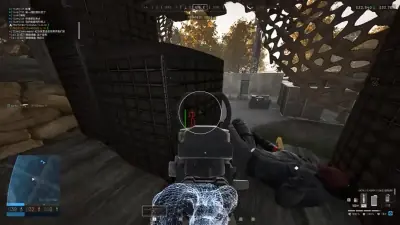
WARDOGS Aimbot Features in a nutshell: FOV, Smoothness, Bone Selection & Aim Prediction For Tactical Advantage
Understand the main WARDOGS aimbot configuration options, including FOV, smoothness, bone selection, visibility checks and aim prediction.
WARDOGS aimbot feature terminology covers several different aspects of automated aiming, including target selection, aiming adjustments and visual indicators. Common configuration options include Field of View (FOV), smoothness, bone selection, visibility checks and prediction.
Understanding these settings helps explain what each component represents and how different aimbot configuration options are categorized.
What Are WARDOGS Aimbot Features?
An aimbot is third-party software that automates or modifies aiming functionality in a game. Its settings generally describe how potential targets are identified and how aiming adjustments are represented.
The published WARDOGS feature list includes:
- Enable Aimbot
- FOV
- Smooth
- Bone Selection
- Visible Check
- Prediction
- Draw FOV
- Draw Target Line
Each option represents a different function.
1. FOV: Field of View
FOV describes the angular area around the aiming direction that a targeting system considers.
A smaller FOV represents a narrower selection area, while a larger FOV represents a wider area.
FOV is therefore associated with target selection rather than the gradualness of aiming adjustments.
2. Smoothness
Smoothness describes how gradually an automated aiming system changes its aiming position.
It is different from FOV because it relates to aiming adjustments rather than the size of the target-selection region.
The precise values and implementation depend on the software.
3. Bone Selection
Bone Selection refers to choosing skeletal reference points on a character model.
Character models contain different body regions, which can be represented by individual skeletal points.
The published feature information confirms Bone Selection but does not provide a complete list of selectable points.
4. Visible Check
Visible Check relates to whether a potential target is considered visible.
It is conceptually different from FOV. One concerns visibility, while the other defines an angular selection area.
5. Aim Prediction
Aim Prediction describes estimating a moving target's future position using information about its movement.
It differs from simply referencing a target's current observed position.
The exact prediction algorithm and available parameters are not documented in the supplied feature information.
6. Draw FOV and Draw Target Line
These are visual configuration options.
Draw FOV: Represents the targeting region visually.
Draw Target Line: Represents the relationship between the aiming reference and a selected target.
Neither option should be confused with the underlying targeting functionality.
Understanding the Main Aimbot Settings
| Setting | General Purpose |
|---|---|
| FOV | Angular target-selection area |
| Smoothness | Gradualness of aiming adjustments |
| Bone Selection | Skeletal target reference |
| Visible Check | Visibility consideration |
| Prediction | Estimated target movement |
| Draw FOV | Visual FOV indicator |
| Draw Target Line | Visual target indicator |
Important: WARDOGS Anti-Cheat Policy
WARDOGS officially prohibits third-party aimbots, ESP, radar tools, recoil modifications and other cheating software.
Its enforcement policy warns that violations may result in temporary suspensions, permanent account bans or hardware bans. The rules also prohibit selling, distributing and advertising cheating software.
Review the official WARDOGS Security and Enforcement Policy before using third-party software. No software provider can guarantee protection from these consequences.
Conclusion
WARDOGS aimbot terminology covers several distinct concepts. FOV describes the target-selection region, smoothness relates to aiming adjustments, bone selection identifies skeletal references, and prediction concerns estimated movement.
Understanding these terms makes it easier to interpret different feature descriptions without confusing functionality or assuming undocumented capabilities.